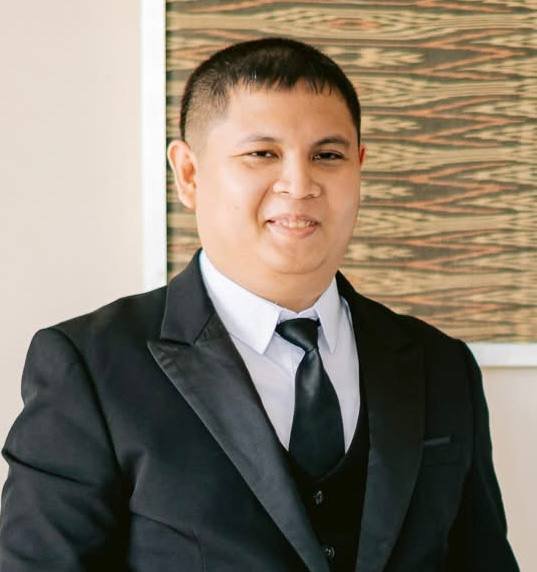
Utah filed 14 criminal counts against Kalshi, naming co-founders Tarek Mansour and Luana Lopes Lara. Federal courts have since moved to block the state’s enforcement authority.
Prediction markets have drawn federal attention. Utah filed 14 criminal counts against Kalshi and its founders, naming Tarek Mansour and Luana Lopes Lara. A federal judge granted the state summary judgment in August, the Tenth Circuit denied Kalshi’s injunction in September, and both the CFTC and Crypto.com filed federal suits on October 26.
- Utah Charges Kalshi Founders Over Prediction Markets
- The Undercover Wager That Anchored the Case
- Federal Courts Push Back on Utah
- How Leagues Are Split Over Prediction Markets
Utah filed 14 criminal counts against Kalshi and named co-founders Tarek Mansour, the chief executive, and Luana Lopes Lara, the chief operating officer, as co-defendants in the case. The complaint alleges an illegal gambling operation and puts the platform’s sports-event contracts at the centre of the dispute.
This is Utah’s second state-level criminal push, after Arizona charged Kalshi in its own prediction-market enforcement campaign. Federal courts have already weighed in, and both the CFTC and Crypto.com’s exchange filed separate federal lawsuits challenging Utah’s authority to enforce state gambling laws against these platforms.
Utah charges Kalshi founders over prediction markets
The criminal charges are the most aggressive step yet in a dispute that has already produced a civil suit, a federal injunction denial and a wave of amicus briefs. Mansour and Lopes Lara are named as co-defendants, and the complaint argues that both maintained control over Kalshi and participated in its operations through a pattern of unlawful activity.
The breakdown of the counts is unusually specific. There is one second-degree felony count for a pattern of unlawful activity, 12 third-degree felony counts of online gambling promotion and one class A misdemeanor for general gambling promotion. The indictment’s logic is narrow: Kalshi allegedly accepted fees from sports-event contracts even though the users were located in a state that prohibits the markets. That is the point on which the whole state case rests.
AGBrief tracks how Nevada and neighbouring states are handling these enforcement campaigns.
The Undercover Wager That Anchored the Case
An investigator with the Utah Attorney General’s Office opened a Kalshi account using a local address, a phone number and a debit card. Between September 13 and 26, the investigator placed 12 sports wagers worth about $115 in total. The bets covered NFL games, college football, MLB, MLS and NHL contests, giving the state a concrete example of what it says the platform offered to residents of Utah.
Prosecutors allege that Kalshi collected fees from those wagers despite knowing the user’s location. The complaint asserts that Mansour and Lopes Lara maintained control of Kalshi and participated in its operations through a pattern of unlawful activity. This level of detail is deliberate, and it gives the case a face: a small number of sports events, a handful of wagers, and a fee collected from the wrong side of a state border.
Federal Courts Push Back on Utah’s Prediction Market Case
A federal judge granted Utah summary judgment in August, and the Tenth Circuit denied Kalshi’s motion for an injunction pending appeal in September. On October 26, both the CFTC and Crypto.com’s exchange filed separate federal suits challenging Utah’s enforcement authority. The argument is jurisdictional: if sports-event contracts fall under the Commodity Exchange Act, then a state cannot treat them as illegal gambling.
Kalshi petitioned the Sixth Circuit for a panel rehearing and an en banc rehearing, arguing that the appellate court’s ruling conflicts with other federal decisions and with recent CFTC rulemaking. The Sixth Circuit directed Ohio and Tennessee to respond by November 12, with responses capped at 3,900 words and no extensions allowed.
How Leagues Are Split Over Prediction Markets
Commercial partners have already weighed in. The NBA signed partnerships with Kalshi and Polymarket, MLB, the NHL and MLS have their own agreements, and Saquon Barkley sold his Polymarket stake after the NFL clarified that its ban on gambling-related investments applies to prediction markets too.
The NFL has declined to sign, calling prediction markets gambling entities rather than investment vehicles. In contrast, other leagues have signed commercial prediction-market deals, and the gap between the two positions is the clearest signal in the industry right now.
Beyond Prediction markets: the wider regulatory picture
The legal fight is only one of several stories moving this week. On October 28, the U.K. raised Machine Games Duty from 20% to 25% on higher-stakes machines, while operators such as Entain and Rank Group posted their strongest share reactions yet despite the tax increase.
Elsewhere, MGM China’s third-quarter revenue rose 5% to a new high, offsetting a 1% drop at the Vegas Strip. Churchill Downs grew its quarterly dividend 7% and announced a $750 million buyback, while Rush Street Interactive saw revenue jump 39% to $385.9 million. Ontario is also opening a competitive land-based casino process in Niagara, inviting up to three operators to compete for CA$3 billion in gaming investment.
A Rutgers Study Adds Another Player to the Debate
The Rutgers study found that 42.7% of Americans aged 13 to 17 gambled in the past year. About 11% were classified as high risk for problem gambling, and roughly one in five of that age group gambled at least weekly. The research surveyed 1,677 people aged 13 to 27 and found that 52.5% of respondents had gambled in the previous year.
The study also flagged a pattern that regulators should take seriously. Nearly 40% of prediction-market participants and 41% of social casino players were classified as high risk for problem gambling, and among high-risk teenagers, 75.5% had a family member who gambled. For policy-makers watching the prediction markets’ legal fight, the health data and the enforcement fight are the same story, just told from two directions.
Frequently Asked Questions
How many criminal counts has Utah filed against Kalshi?
Utah filed 14 criminal counts against Kalshi, naming co-founders Tarek Mansour and Luana Lopes Lara as co-defendants. The charges include one prediction markets second-degree felony for pattern of unlawful activity, 12 third-degree felony online-gambling-promotion counts and one class A misdemeanor. This is the second state to pursue criminal action.
What did the undercover investigator allegedly do?
An Attorney General investigator opened a Kalshi account using a local address, phone and debit card, then placed 12 sports wagers worth about $115 between September 13 and 26. The bets covered NFL, prediction markets college football, MLB, MLS and NHL games, and Kalshi allegedly collected fees despite knowing the user’s Utah location.
Have Utah’s prediction market charges survived court?
A federal judge granted Utah summary judgment in August, and the Tenth Circuit denied Kalshi’s injunction request in September. On October 26, both the CFTC and Crypto.com’s exchange filed federal suits challenging the state’s enforcement authority, and Kalshi has petitioned the Sixth Circuit for rehearing.
Who has signed on to support Kalshi’s appeal?
Amicus briefs filed in the Tenth Circuit appeal came from 37 states, Washington DC, the Northern Mariana Islands, the American Gaming Association, Better Markets and tribal gaming organisations. The Sixth Circuit gave Ohio and Tennessee until November 12 to respond to Kalshi’s rehearing petition, capped at 3,900 words.
Why is the NFL taking a different stance from other leagues?
The NBA, MLB, NHL and MLS have signed commercial prediction-market deals, while the NFL has declined, calling them gambling entities rather than investments. Eagles running back Saquon Barkley sold a Polymarket stake after the NFL clarified its ban. The league gap is the clearest sign of where the industry is heading.
How much do prediction markets attract teenagers?
The Rutgers study found 42.7% of Americans aged 13 to 17 gambled in the past year, with roughly 11% classified as high risk prediction markets for problem gambling. Among high-risk teens, 75.5% had a family member who gambled. About 6.6% of the 13-27 sample participated in prediction markets, a lower figure than social casino gaming at 8.5%.
This article has been thoroughly researched and reviewed by the CasinoBait editorial team to ensure accuracy and relevance for Asian casino players.