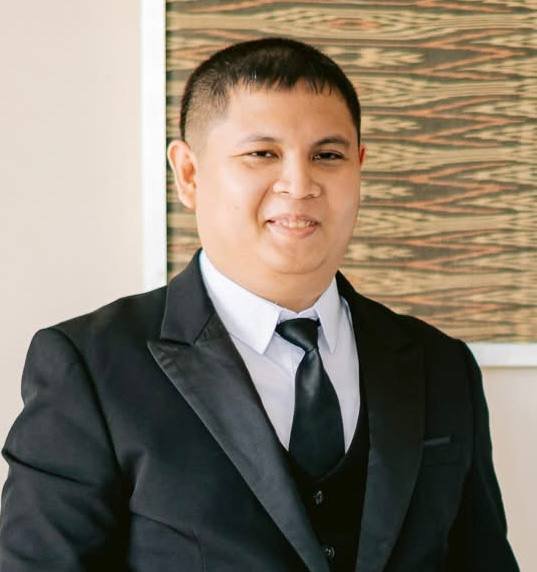
Paul Gauselmann built a €2.1 billion gaming empire from 17 jukeboxes. He died on August 21, 2026, at 91, leaving an industry he shaped for nearly seven decades.
Paul Gauselmann, founder of Merkur Group, died on August 21, 2026, at age 91. He built the company from a 1957 jukebox sideline into a €2.1 billion gaming empire with 15,254 employees across 241 companies. Industry leaders from IGT, WorldGaming and Merkur itself paid tribute to the man they called a pioneer and visionary.
- From 17 Jukeboxes to a €2.1 Billion Empire
- Industry Tributes Pour In
- The Merkur Group He Leaves Behind
- Philanthropy and the Family Legacy
Paul Gauselmann died on August 21, 2026. He was 91. The founder of Merkur Group passed away just weeks before his 92nd birthday, leaving behind a company he built from 17 jukeboxes into a €2.1 billion gaming empire. Gauselmann spent 67 years at the helm. He stepped down as chairman on October 1, 2024, handing operational control to CFO Lars Felderhoff and the chairmanship of the supervisory board to his son Michael. Even after retirement, he continued visiting the office. He reduced his working week to four days but never fully stepped away. Merkur Group confirmed the death on its homepage with a simple black banner. The company called him a “courageous fighter with grand visions.” A memorial has been set up at the Paul Gauselmann statue in the courtyard of Benkhausen Castle, the group’s in-house training centre in Espelkamp. Industry figures across the globe have paid tribute. IGT called his contributions “immense.” WorldGaming’s Stuart Hunter praised his “lasting contribution” and noted his role in smoothing ICE’s 2025 relocation from London to Barcelona. Merkur chairman Lars Felderhoff spoke of “shared successes, inspiring conversations and valuable experiences.” The tributes are not ceremonial. Gauselmann’s fingerprints are on nearly every major gaming market in Europe and beyond.
From 17 Jukeboxes to a €2.1 Billion Empire
Gauselmann’s origin story is the stuff of post-war German industrial legend. Born in 1934, he trained as a telecommunications inspector and completed his apprenticeship as best in class. In 1957, at age 22, he launched a sideline installing 17 Bergmann jukeboxes. He had practically no capital. A year earlier, he had invented a remote selection box with a telephone dial for German jukeboxes — a feature previously available only on American machines. That device became his first patent. More than 300 would follow. In 1964, he went fully self-employed. The company had 15 employees and installed 300 slot machines in pubs and restaurants. Gauselmann and his brothers Willi and Eugen bought second-hand American jukeboxes, overhauled the technology and fitted them into new cabinets. The refurbished units cost three to four times less than new imports. Demand exploded. The real breakthrough came in 1974. Gauselmann opened the first Casino Merkur-Spielothek in Delmenhorst, Lower Saxony. He designed it to four-star hotel standards. The concept — innovative games, trained staff, pleasant atmosphere — became the template for 800 arcades across Europe. In 1976, the laughing Merkur sun logo debuted. In 1977, the Merkur B slot machine hit the market. It was the first machine Gauselmann developed in-house, and it delivered up to 100% more gaming enjoyment than competitors’ products. By 1985, Gauselmann had captured more than 50% of the German gaming machine market. The Merkur Disc, launched in 1983, replaced reels with discs and remains the best-selling AWP machine in German history with 40,000 units sold. International expansion began in 1986 with the first arcade in Amsterdam. In 1990, the ATRONIC subsidiary — led by son Michael Gauselmann — broke into the global casino market. By 1998, ATRONIC became the first European company to secure a Nevada manufacturing licence. The group entered sports betting in 2005 through the Cashpoint acquisition. It moved into online gaming in 2014. The 2012 purchase of British arcade chain Praesepe was the largest acquisition in company history. In 2021, Merkur took over WestSpiel casinos in North Rhine-Westphalia. In 2025, it acquired American software games company Gaming Arts. The corporate group now holds interests in 241 companies. Revenue for 2025 totalled €2.103 billion. The workforce numbers 15,254. AGBrief tracks executive transitions and industry leadership across global gaming markets.
Industry Tributes Pour In
The gaming industry moved quickly to honour its departed giant. Merkur Group’s official statement set the tone. “For everyone who knew Paul Gauselmann, the loss of him is still too much to take in,” the company said. “Yet, as he would have wanted, our gaze is fixed on the Merkur sun.” The statement continued: “The Merkur Group, together with its staff members, pays its respects to an extraordinary individual, with humility and deep gratitude.” IGT posted on LinkedIn that Gauselmann’s contributions to the global gaming industry were “immense.” The post read: “Paul’s pioneering spirit, entrepreneurial vision, and dedication to the evolution of gaming have left an enduring mark on our industry and all those who had the opportunity to work alongside him.” Stuart Hunter, managing director of WorldGaming, highlighted Gauselmann’s industry-wide influence beyond Merkur itself. “The WorldGaming team was deeply saddened to learn of the passing of Paul Gauselmann, founder of the Merkur Group and an inspirational personality who made a profound contribution to the development of the international industry,” Hunter said. He added that Gauselmann’s “long-term support of ICE also helped smooth its 2025 relocation from London to Barcelona.” Hunter summarised the founder’s qualities as Paul Gauselmann “entrepreneurship, drive, creativity, vision and empathy.” Lars Felderhoff, who succeeded Gauselmann as chairman of the management board in October 2024, offered a personal tribute. “I am deeply grateful for the many personal encounters, shared successes, inspiring conversations and valuable experiences I was fortunate enough to share with Paul Gauselmann,” Paul Gauselmann said. “I will carry them with me, just as I will always remember the remarkable person behind this extraordinary legacy.” The tributes reflect Gauselmann’s dual role. He was a company founder who built a family-held empire. He was also an industry advocate who served for decades as a voice for the German gaming machine sector, pushing for regulatory clarity and market expansion.
The Merkur Group He Leaves Behind
Gauselmann’s succession plan was deliberate and long-planned. He had stated that reorganising the company by his 90th birthday was a long-held wish. He accomplished it. On October 1, 2024, Lars Felderhoff took over as chairman of the management board. Jürgen Stühmeyer and Manfred Stoffers became vice-chairs. Michael Gauselmann, who joined the company in 1982 and led its international expansion through ATRONIC, became chairman of the supervisory board and of the Gauselmann Family Foundation. Paul Gauselmann remained involved as a foundation member, ensuring continued family influence over strategic direction. The corporate structure he built is designed for longevity. In 2016, the entire Gauselmann family transferred their shares into the Gauselmann Family Foundation. The foundation’s advisory board and board of directors are predominantly family members. That structure insulates the company from external takeover and preserves the founder’s vision. The group underwent a full rebranding in early 2024. Gauselmann AG became Merkur.com AG. The Gauselmann Group became the Merkur Group. The change signalled digitalisation and internationalisation. It also marked the final stage of Paul Gauselmann’s career. The Merkur Group today spans amusement arcades, casinos, sports betting, online Paul Gauselmann gaming and slot machine manufacturing. It operates the Merkur Spiel-Arena naming rights for Fortuna Düsseldorf. It sponsors RB Leipzig, Arminia Bielefeld and FC Schalke 04. In March 2026, it signed a ten-year naming rights deal for the Merkur Ostseehalle in Kiel. The group holds casino licences in multiple German states, operates cruise ship casinos through TUI Cruises, and runs venues across the UK through Merkur Casino UK. The digital arm includes licensed online arcades JackpotPiraten and BingBong, plus Merkur Slots, Merkur Bets and Slotmagie for the German market.
Philanthropy and the Family Legacy
Gauselmann’s wealth was substantial but not ostentatious. He owned no fleet of luxury limousines, no yacht, no private plane. His old-school thrift funded a different kind of spending. In 1999, Paul Gauselmann established the Paul and Karin Gauselmann Foundation with his wife of 58 years. Over 25 years, it distributed nearly €5 million to roughly 2,500 beneficiaries. The causes were local and practical. He funded modernisation of Rahden hospital, an extension to the stroke unit at Minden Clinic, and a campus building for training medical students. He donated a €1.4 million operating theatre robot for Lübbecke hospital. He built two childcare centres in Espelkamp at a cost of around €6 million. When Espelkamp faced unforeseen financial difficulties, he donated €8.7 million. He gave Lübbecke €5 million more. In a matter of months, he had contributed roughly €20 million to the public Paul Gauselmann good. He also announced that a substantial portion of his private assets would transfer to the foundation. “This will make it possible to support numerous good causes in the coming years,” he said. The most visible monument is Benkhausen Castle in Espelkamp. Gauselmann acquired the decaying 500-year-old estate and invested several million euros to restore 11 buildings. Today it serves as a training centre, conference hotel, meeting place and cultural venue. The English Garden with its walking path and jetty is open to the public daily. A statue of Paul Gauselmann stands in the courtyard. It is now a memorial site. Gauselmann received honorary citizenship of both Espelkamp and Lübbecke. He was called the “pope of the amusement business” in Germany. He held more than 300 patents. He built an empire without venture capital, without an IPO, without selling equity to outsiders. The Merkur sun he created in 1976 still shines on 15,000 employees, 241 companies and a balance sheet measured in billions. Paul Gauselmann’s death closes a chapter. The book he wrote will keep selling machines, employing people and funding hospitals for years to come.
Frequently Asked Questions
When did Paul Gauselmann die?
Paul Gauselmann died on August 21, 2026, at age 91. He passed away just weeks before his 92nd birthday and roughly two years after stepping down as Merkur Group chairman on October 1, 2024.
How big is the Merkur Group today?
Merkur Group reported €2.103 billion in revenue for 2025 and employed 15,254 people worldwide. The group holds interests in 241 companies, operates across Europe, and has expanded into online gaming, sports betting and international casino markets.
How did Paul Gauselmann start Merkur Group?
Gauselmann launched the business in 1957 with 17 jukeboxes as a sideline while working as a telecommunications inspector. Paul Gauselmann went fully self-employed in 1964 with 15 employees. The first gaming arcade opened in Delmenhorst in 1974, and the Merkur B slot machine debuted in 1977.
Who leads Merkur Group now?
Lars Felderhoff serves as chairman of the management board since October 2024. Michael Gauselmann, Paul’s son, chairs the supervisory board and the Gauselmann Family Foundation. The family foundation holds the group’s voting shares, ensuring family control.
What philanthropic work did Gauselmann do?
Gauselmann established the Paul and Karin Gauselmann Foundation in 1999, distributing nearly €5 million to 2,500 beneficiaries. He donated €20 million in a single year to hospitals, childcare centres and municipal relief in Espelkamp and Lübbecke, and restored Benkhausen Castle as a public cultural venue.
What is Gauselmann’s most important invention?
Gauselmann held over 300 patents. His first was a remote jukebox selection box in 1956. His most commercially significant invention was the Merkur Disc slot machine in 1983, which replaced reels with discs and sold 40,000 units — still the best-selling AWP machine in German history.
This article has been thoroughly researched and reviewed by the CasinoBait editorial team to ensure accuracy and relevance for Asian casino players.